THE REQUEST
On January 8, 12 and 16, 2026, the victims sent three written requests for reasonable protection to the U.S. Attorney’s Office. Each invoked the Crime Victims’ Rights Act, which guarantees “the right to be reasonably protected from the accused.” (18 U.S.C. § 3771(a)(1); No. 2:26-cv-09383, Dkt. 10, Exs. A–C.)
The requests described intimidation the victims had reported to federal agents, including “three men with gang-affiliated tattoos [who] attempted to breach my warehouse at night, using flashlights to locate me inside.” (Dkt. 9 at 40, Decl. ¶ 4.)
THE ANSWER
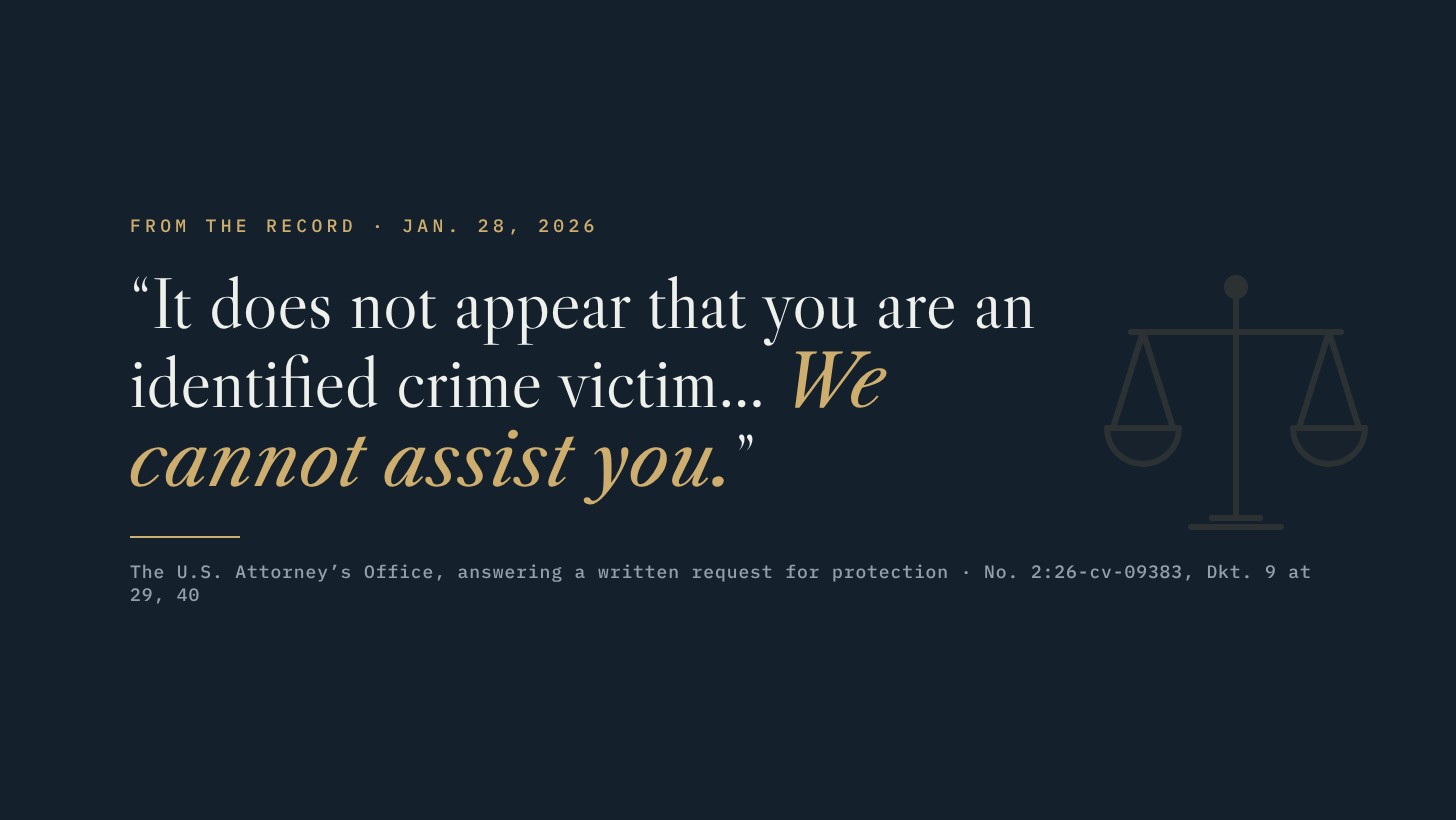
On January 28, 2026, the office replied: “[i]t does not appear that you are an identified crime victim in a federal criminal proceeding,” and “[w]e cannot assist you.” (Dkt. 9 at 29, 40.)
Under oath, the victims state that no protection was ever arranged. (Dkt. 9 at 40, Decl. ¶ 5.)
TWENTY-FIVE YEARS
The victims’ filing lays out a record of federal cases running from 2000 to 2025. According to that filing, the man they sought protection from has never been held to account in any of them.
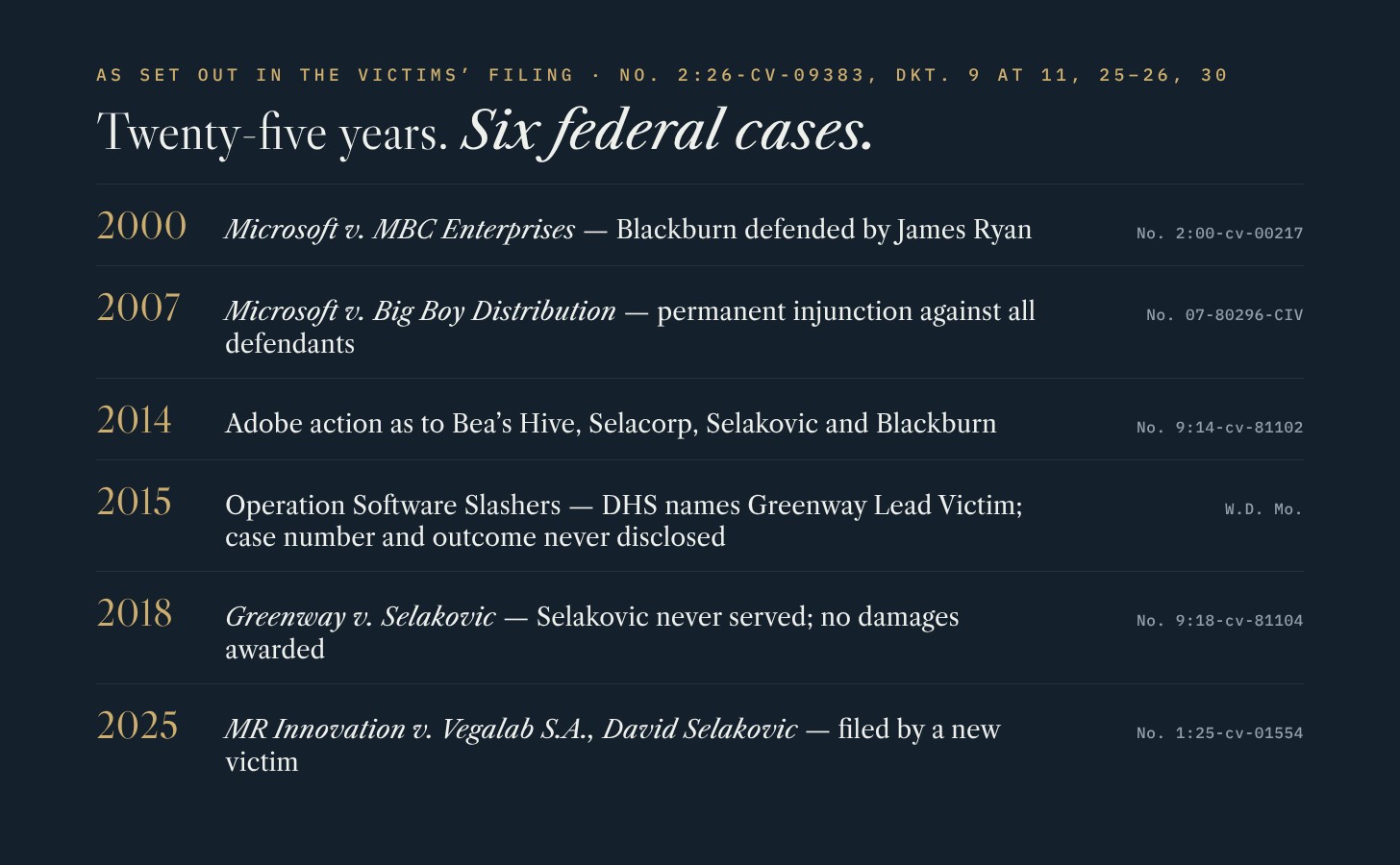
2000: Microsoft Corp. v. MBC Enterprises. James D. Ryan, who later became the victims’ own attorney, defended Selakovic’s longtime partner, Steven Blackburn. (No. 2:00-cv-00217; Dkt. 9 at 11.)
2007: Microsoft Corp. v. Big Boy Distribution. Ryan again defended Blackburn. The case ended in a permanent injunction against all defendants. (No. 07-80296-CIV; Dkt. 9 at 11.)
2014: An Adobe action was brought as to Bea’s Hive LLC, Selacorp, David Selakovic and Steve Blackburn. (No. 9:14-cv-81102; Dkt. 9 at 11.)
2015: DHS named the victims’ company Lead Victim in Operation Software Slashers, a federal counterfeit prosecution in the Western District of Missouri. Its case number and outcome have never been disclosed to the victims. (No. 2:26-cv-09383, Dkt. 1.)
2018: Greenway Nutrients v. Selakovic (S.D. Fla.). James Ryan appeared for the defense. According to the victims’ filing:
no default judgment was entered against the Selakovic-owned supplier;
Selakovic was never served;
no discovery was taken from the Ryans;
not one dollar in damages was awarded.
(No. 9:18-cv-81104; Dkt. 9 at 12, 25–26.)
2025: A different company sued Vegalab S.A. and David Selakovic for trademark infringement. In the words of the victims’ filing: “another victim, in a long line of victims, in another federal court, describing the same enterprise.” (MR Innovation Co. v. Vegalab S.A., No. 1:25-cv-01554 (D. Del.); Dkt. 9 at 30–31.)
The filing also states that the victims put that 2025 case directly in the government’s hands in February 2026, along with the name of the company’s lawyer. “It yet, again, does not appear to have done anything with any of it.” (Dkt. 9 at 31.)
THE STRIKE
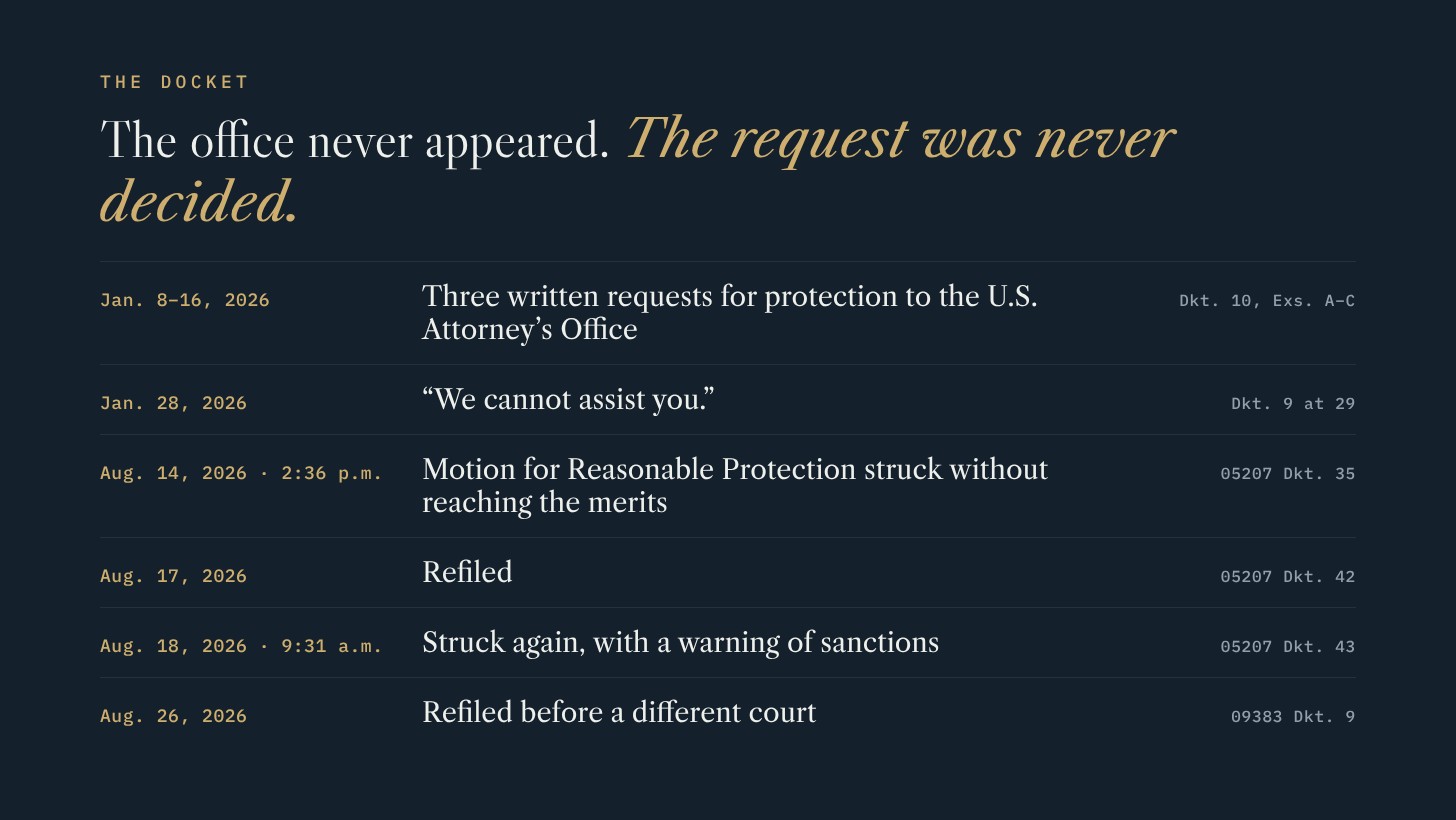
August 14, 2026, 2:36 p.m.: The victims’ Motion for Reasonable Protection was struck under the local rules for failing to meet and confer. The court did not reach the merits. (No. 2:26-cv-05207, Dkt. 31; Dkt. 35.)
August 17: Refiled. (Dkt. 42.)
August 18, 9:31 a.m.: Struck again, with a warning that further noncompliance could bring sanctions. (Dkt. 43.)
Who were they supposed to confer with? According to the victims’ filing, the U.S. Attorney’s Office “disclaimed service on June 2, 2026, has never appeared, and has never filed a single responsive pleading.” (No. 2:26-cv-09383, Dkt. 9 at 32.)
THE AUTHORITY
The underlying prosecution was brought in the Western District of Missouri.
In 2018, the judge who struck the request had held that his court lacked subject-matter jurisdiction over the victims’ claims. (No. 2:17-cv-07748, Dkt. 13.)
As the victims’ filing puts it: “A court that ‘lacked subject-matter jurisdiction’ to reach his victim’s-rights claims in the first place cannot, by striking his proof unread on a curable scheduling formality, have decided whether he is a victim at all.” (No. 2:26-cv-09383, Dkt. 9 at 36.)
THE ENTERPRISE, AS FILED
On August 26, 2026, the victims refiled their request for protection in a different court. Attached to it as Exhibit F is the infographic below, reproduced as filed, with the court’s redactions and header stamps. It sets out the victims’ allegations about the enterprise they asked to be protected from, and about the March 29, 2019 litigation-funding transaction. (No. 2:26-cv-09383, Dkt. 9; Dkt. 10, Ex. F, Page ID #:656–665.)
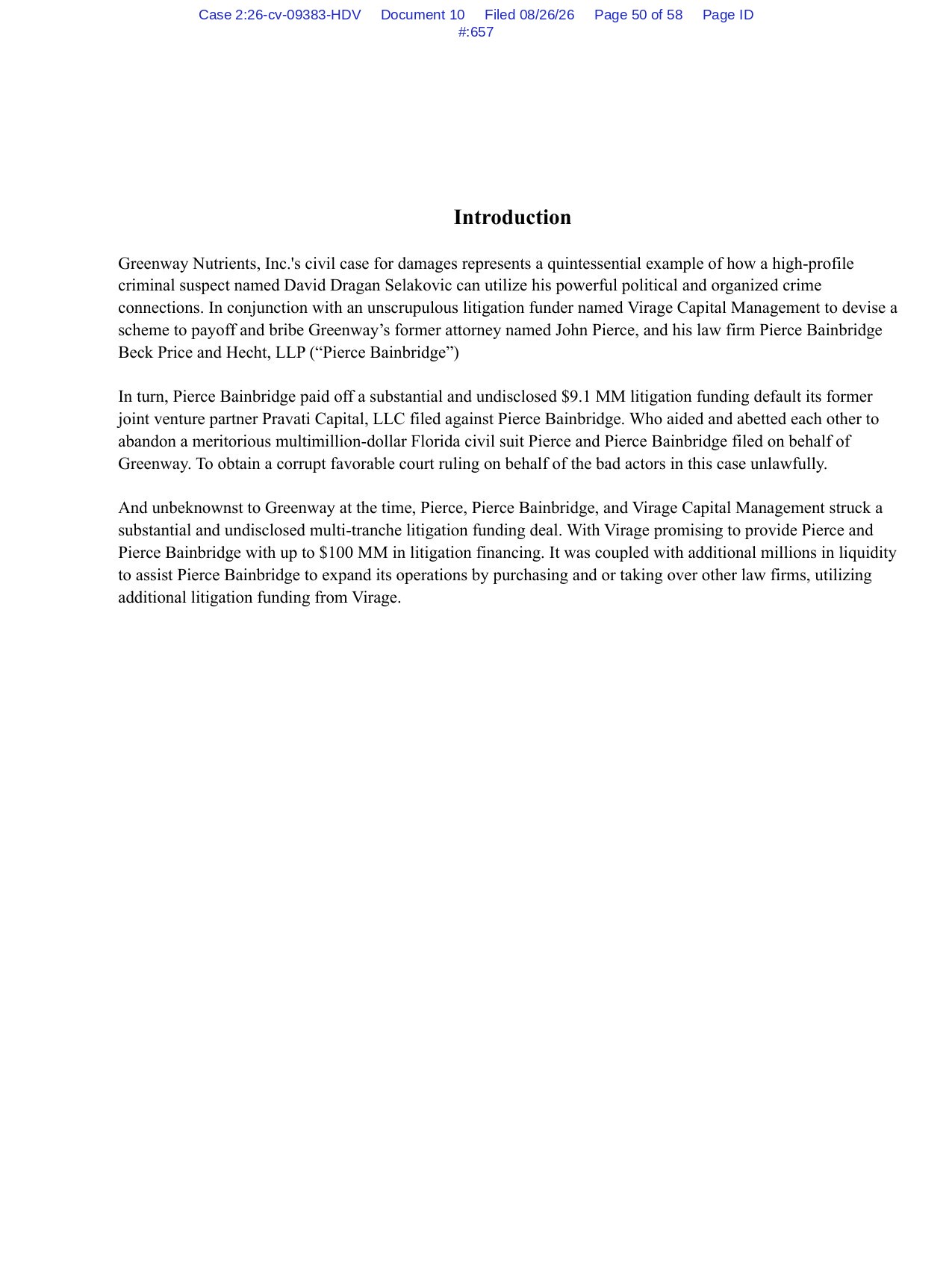
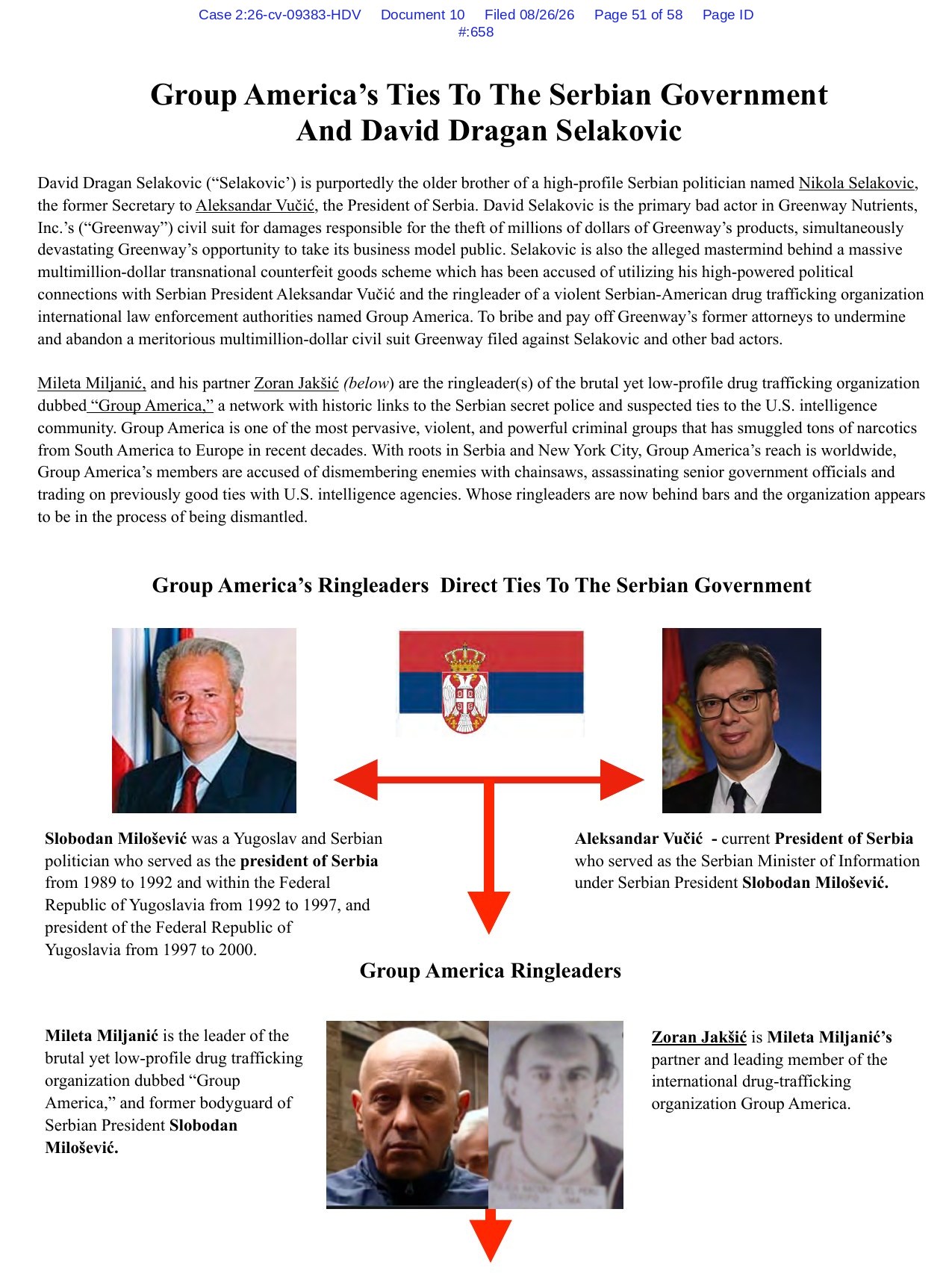
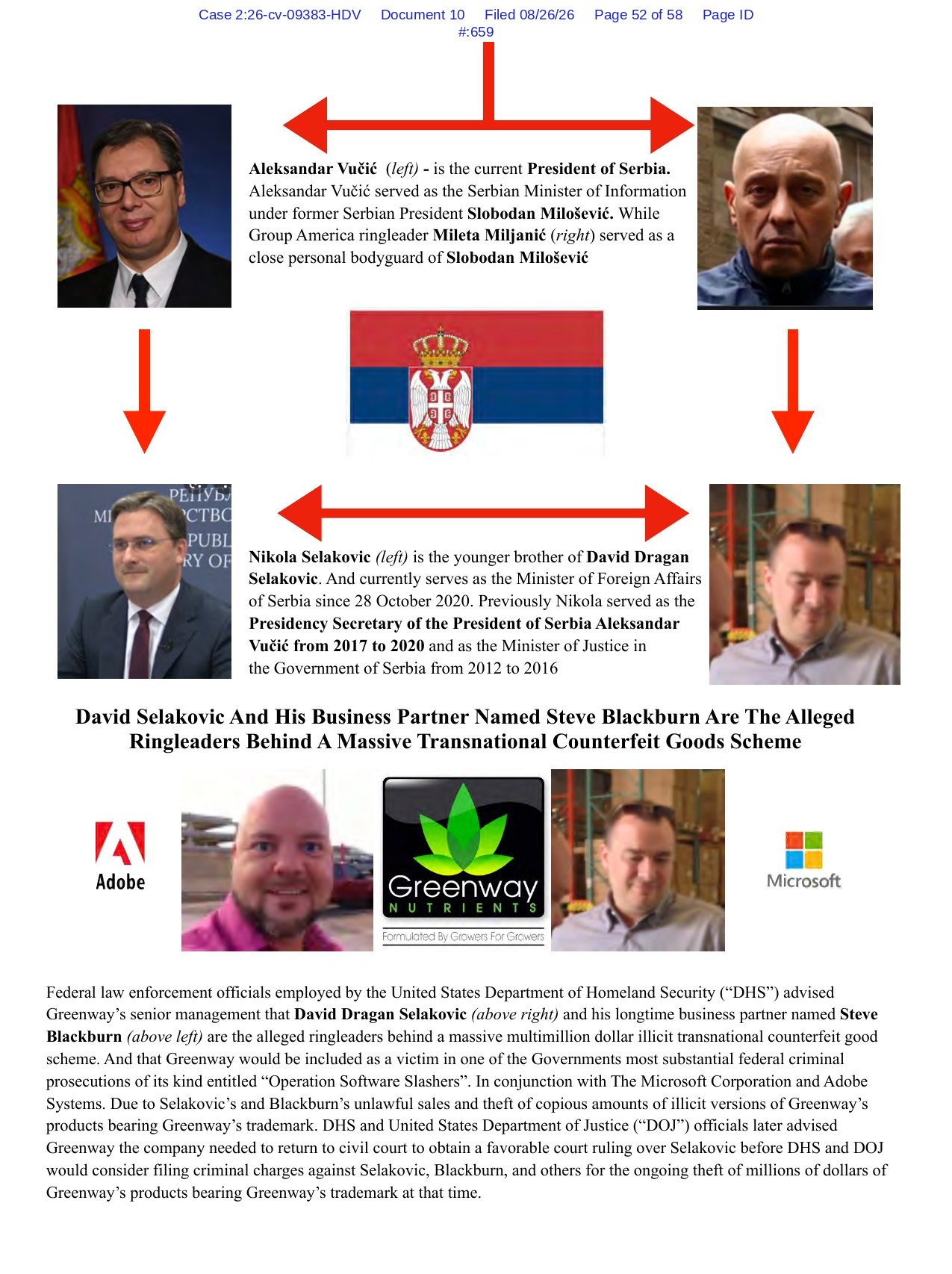
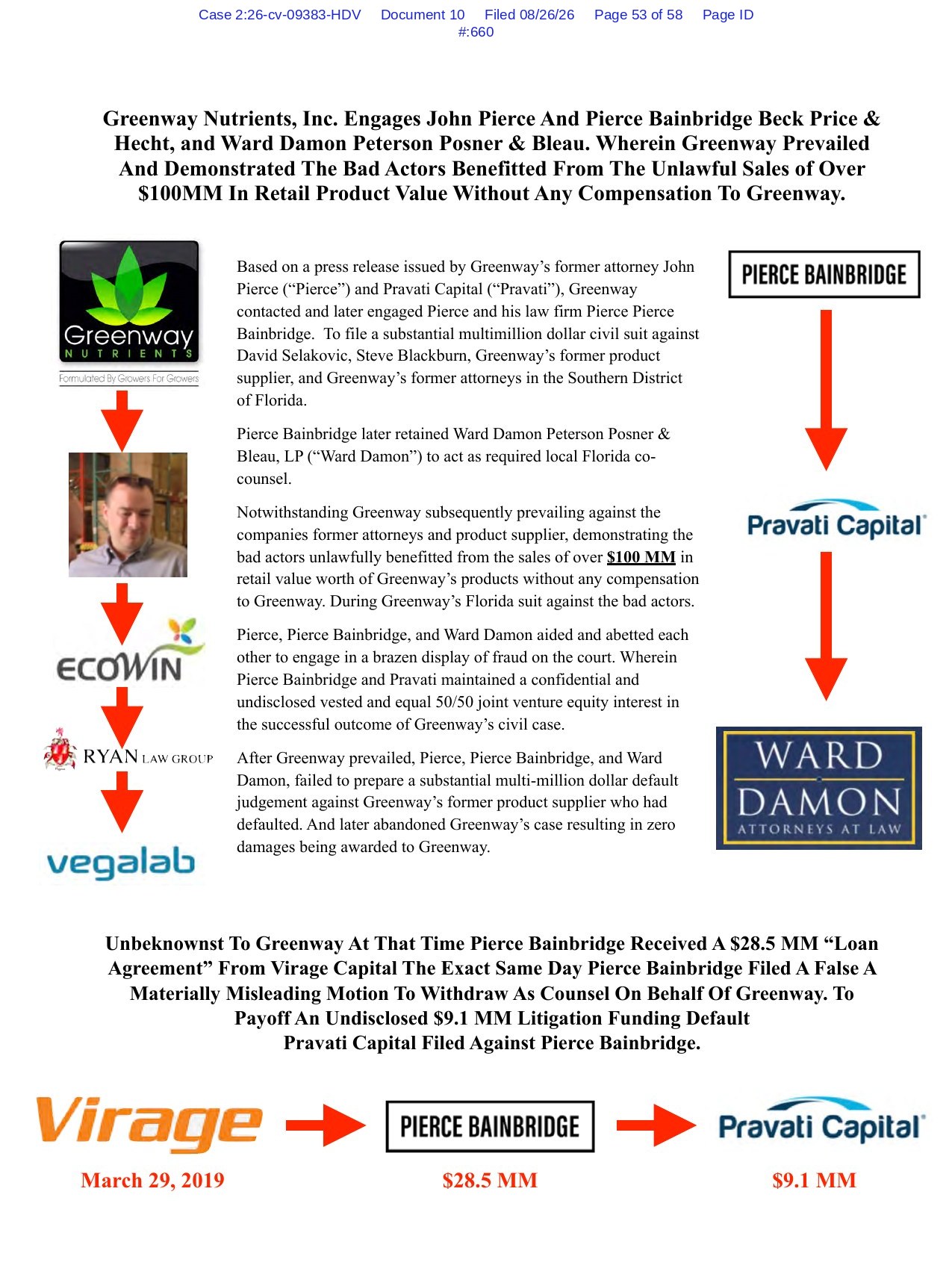
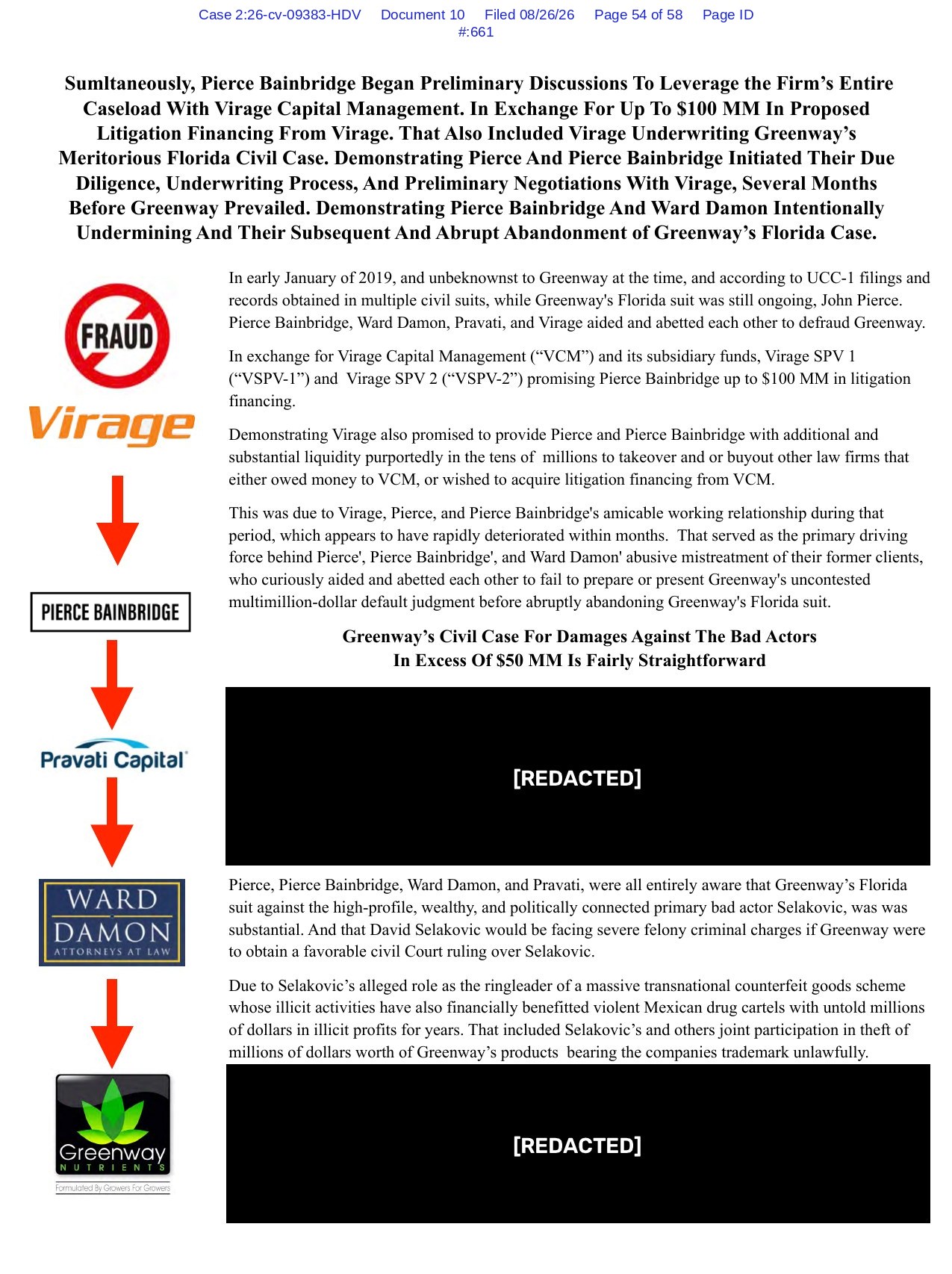
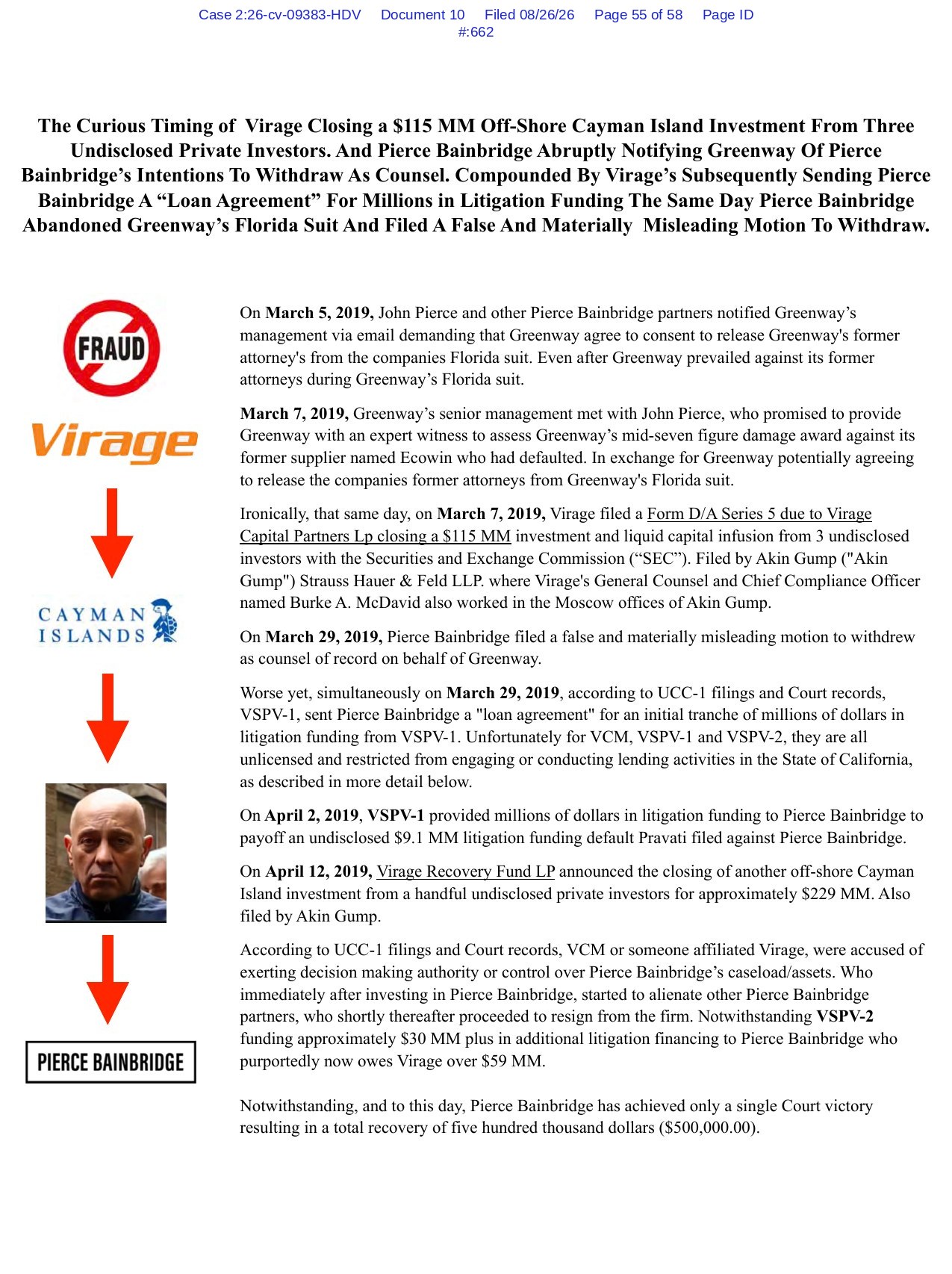
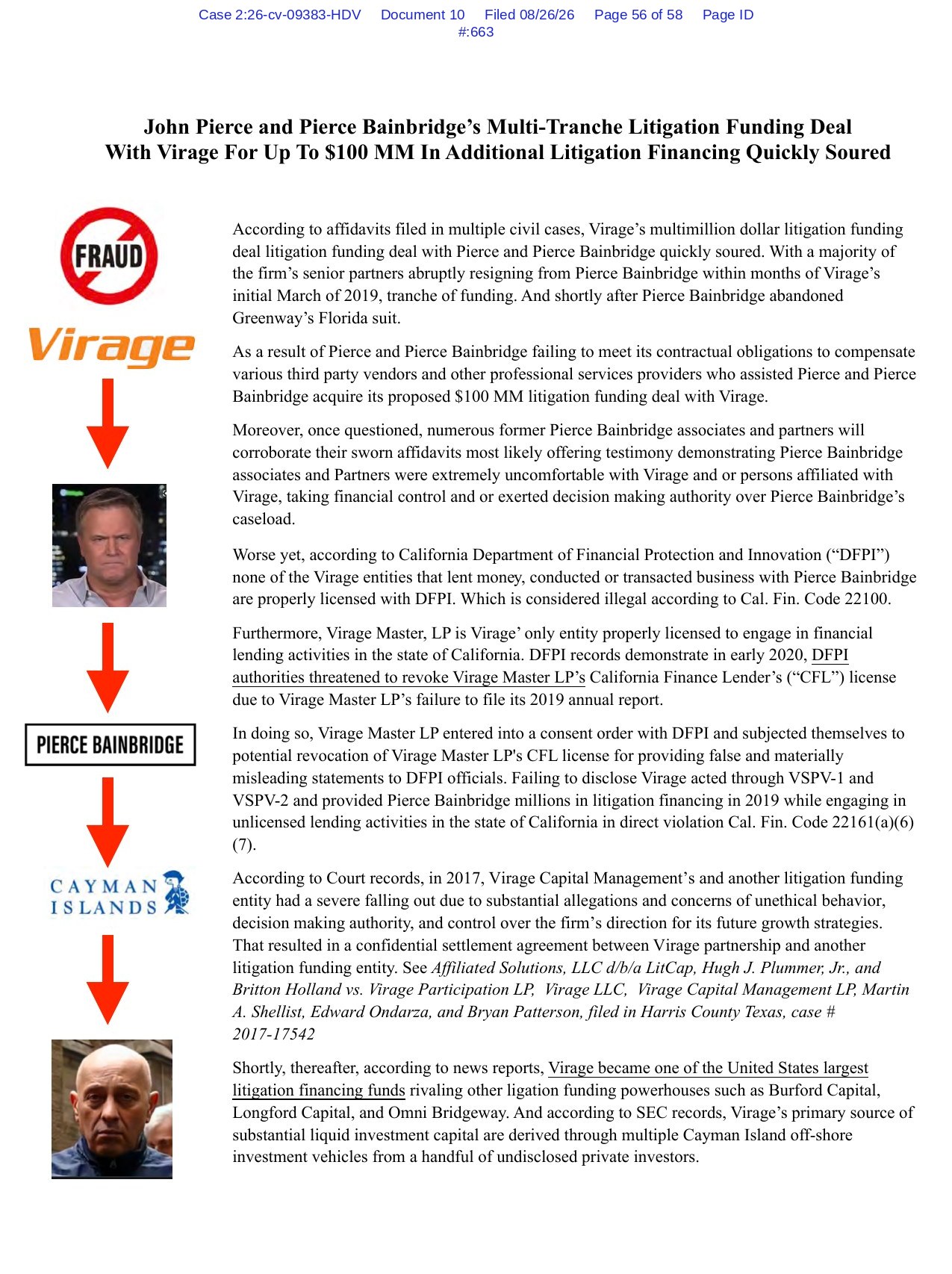
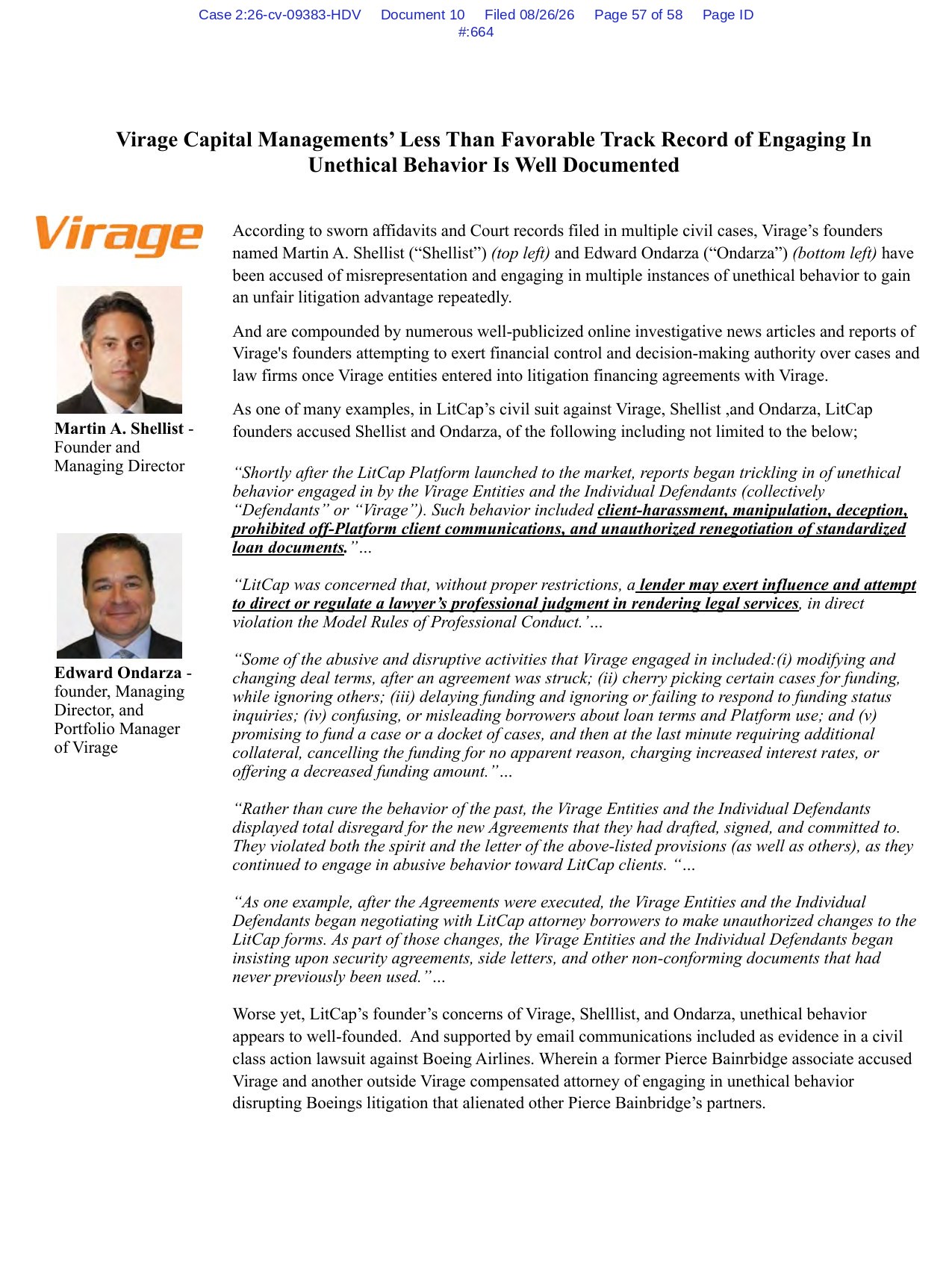
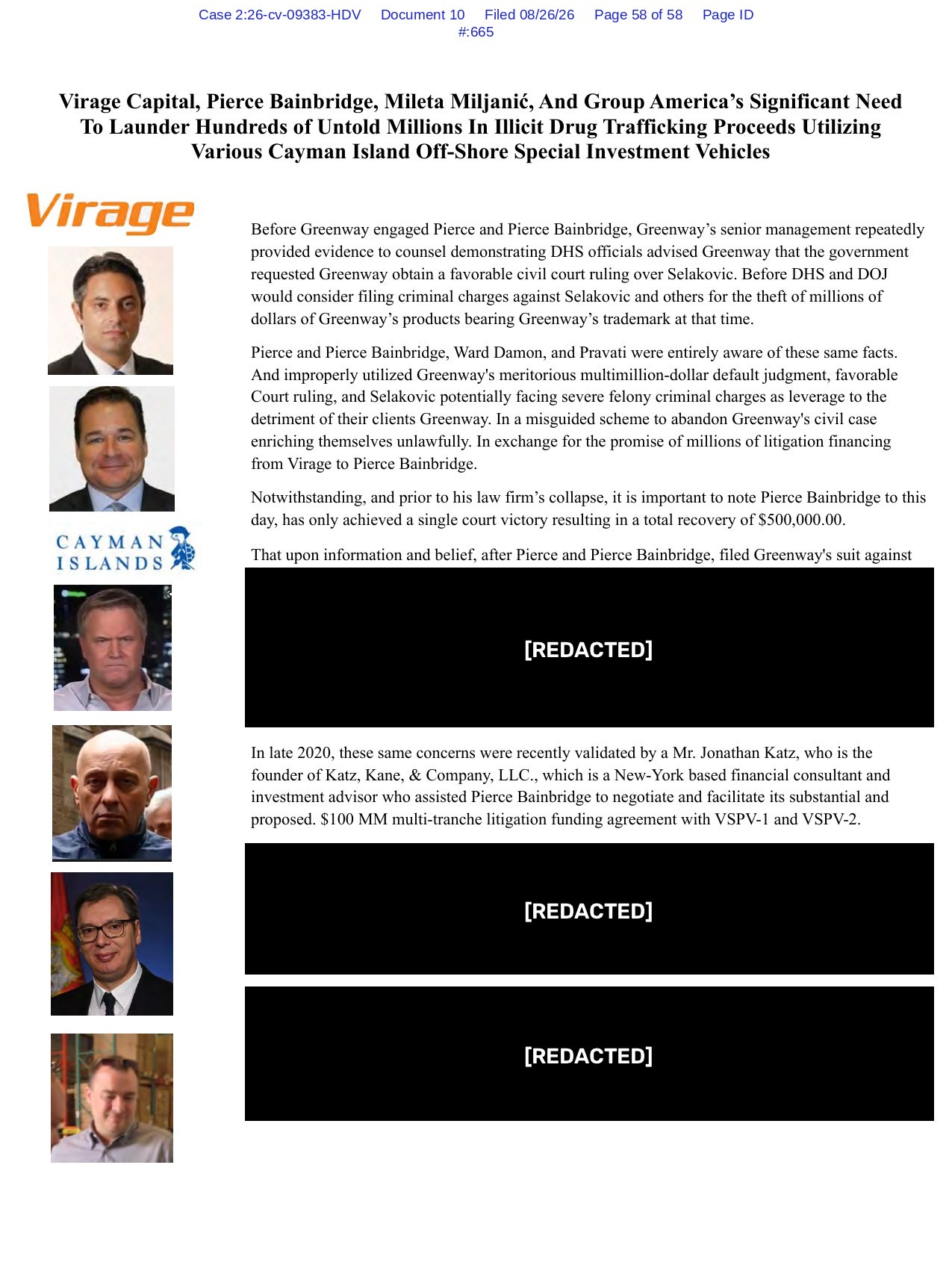
The pages above are reproduced exactly as filed in federal court, including all redactions. They state the victims’ allegations. No court has made findings on them.
WHERE IT STANDS
The protection request is pending before a different court. (No. 2:26-cv-09383, Dkt. 9.)
That same day, August 26, the original judge recused himself from the victims’ other case.
As of the filing, no protection had been arranged.
Twenty-five years. Six federal cases. Three requests for protection. Two strikes. If you don’t believe it, read it for yourself.
The record (available on PACER):
No. 2:26-cv-09383 (C.D. Cal.), Dkts. 1, 9, 10
No. 2:26-cv-05207 (C.D. Cal.), Dkts. 31, 35, 42, 43
No. 2:17-cv-07748 (C.D. Cal.), Dkt. 13
Nos. 2:00-cv-00217; 07-80296-CIV; 9:14-cv-81102; 9:18-cv-81104 (S.D. Fla.); 1:25-cv-01554 (D. Del.)
This article summarizes and quotes filings on the public docket, including exhibits reproduced as filed. It reflects the victims’ position as self-represented petitioners. No court has made findings on these matters. Nothing here is legal advice, and nothing here waives any right under the Crime Victims’ Rights Act or the Federal Tort Claims Act.